
A North American Partnership
Workplace Fairness
Unstoppable Performance Leaders presents
Workplace Fairness International delivers
Unstoppable Performance Leaders has entered into a formal, licensed partnership with Workplace Fairness International, the home of the Donais Fairness Theory™. Under this agreement, UPL represents WFI across North America, bringing its workplace fairness programs and services to organizations throughout Canada and the United States.
UPL presents and manages every engagement, the client relationship, and the customization. Workplace Fairness International, led by founder Blaine Donais, leads and delivers the fairness work. UPL is a 100% woman-owned firm with offices in Toronto and New York.
01 The Idea
What Is Workplace Fairness?
“Fairness is equity of concern and respect for every person in the workplace, regardless of their position.”
Blaine Donais, founder of Workplace Fairness International
Where fairness exists, people trust one another, speak up, collaborate, and stay. It is the ground beneath engagement, retention, innovation, and performance. An organization is almost entirely its people, and fairness is what frees those people to do their best work.
Fairness also determines whether conflict happens at all. When people feel treated with dignity, respect, and honest communication, they give the benefit of the doubt. When they do not, the same ambiguous event is read as an attack. Get fairness right and trust compounds. Get it wrong and it erodes quietly, until it costs the organization its people, its productivity, and its legal standing.
This is not about taking sides. A fair workplace serves leaders and organizations as much as employees: stronger engagement and retention, fewer grievances and complaints, lower legal exposure, and people who bring their full effort.
02 The Framework
The Donais Fairness Theory™
“Workplace conflict is not random. It is predictable. And if it is predictable, it is preventable.”
Blaine Donais, founder of Workplace Fairness International
Conflict almost always begins with a perceived injurious event, a moment where someone feels wronged. What makes an event feel injurious is unfairness, which is why fairness determines whether conflict happens at all. Left unseen, unfairness also produces what WFI calls Silent Conflict Theory™: employees who stay but quietly check out, at a real and measurable cost to productivity and trust.
Fairness can be measured
Using the Testing Instrument for Fairness Systems (TIFFS®), the theory scores a workplace’s conflict management system, so fairness becomes something you can baseline, benchmark, and improve, rather than a feeling.
Grounded in the Canadian Standard
The theory is grounded in the National Standard of Canada for Psychological Health and Safety in the Workplace (CSA Z1003), the world’s first national standard of its kind and a foundation of the international ISO 45003 standard. It treats conflict management as a measurable psychosocial risk factor, which is what makes fairness auditable and defensible.
That matters when the question stops being cultural and becomes formal: a board asking what is being done about psychological health and safety, a harassment and violence prevention obligation, or a regulator, insurer, or plaintiff asking what steps the organization actually took. Fairness work gives you evidence rather than intentions.
03 The Founder
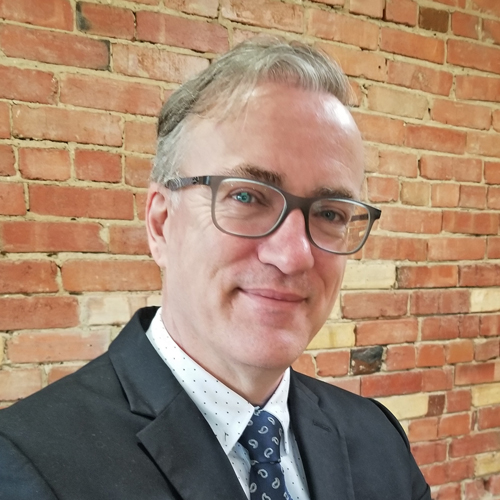
Blaine Donais
President & Founder, Workplace Fairness International
LL.B., LL.M., C.Med., Q.Arb., PHSA, RPDR
About Blaine Donais
Blaine Donais is the President and Founder of Workplace Fairness International and the author of the Donais Fairness Theory™. A workplace solicitor and member of the Law Society of Ontario since 1995, he is a Chartered Mediator, Qualified Arbitrator, Psychological Health and Safety Advisor, and Registered Practitioner of Dispute Resolution, with over 25 years of experience across unionized and non-unionized environments. He has trained more than 600 conflict management practitioners worldwide.
Blaine is an Adjunct Professor at York University (Workplace Dispute Resolution) and the University of Toronto (Centre for Industrial Relations and Human Resources), and the author of Workplaces That Work, Engaging Unionized Employees, and The Art and Science of Workplace Mediation, along with the WFI White Paper on Workplace Conflict Management in Canada.
“Not ‘how do we win the fight,’ but ‘how do we stop the fight from happening in the first place.’”
Blaine Donais

Workplaces That Work

Engaging Unionized Employees

The Art and Science of Workplace Mediation
04 The Signals
You May Recognize Some of This
Organizations usually come to us when something has become hard to ignore.
Grievances and complaints are rising, and the same issues keep coming back.
A team or department has broken down, and trust has not recovered on its own.
Tension between management and the union is making everyday decisions harder.
Harassment and violence complaints keep surfacing despite policies and training.
Engagement scores are slipping, and good people are quietly leaving, or staying and checking out.
Leaders avoid difficult conversations until small issues become formal ones.
Your board or executive is asking what you are doing about psychological health and safety, and you need a defensible answer.
These are not separate problems. They are symptoms of a conflict management system that is not working, and that is what workplace fairness addresses. If any of this sounds familiar, contact us and we will map what your organization is navigating against the right starting point.
05 The Signature Program
The Workplace Fairness Culture Program
Our Signature Leadership Development Offering
The only North American program that develops both the individual leader and the conflict management system they work within. Presented by Unstoppable Performance Leaders and delivered by Workplace Fairness International, it turns the Donais Fairness Theory™ into a working culture, and is consistently linked to stronger trust, fewer grievances, and reduced litigation.
Fairness Leadership
For all leaders, union leaders, HR and labour relations, health and safety professionals, and ombuds.
It builds how leaders act day to day. It is the prerequisite for the courses that follow, and it can also be taken entirely on its own as a standalone leadership course, which is where we usually recommend starting.
Fairness Structure
For senior leaders and internal practitioners.
It introduces the Testing Instrument for Fairness Systems (TIFFS®) and teaches your people to identify and evaluate your conflict management system.
Builds internal capacityFairness Process
For the same group.
It teaches WFI’s five-phase Workplace Fairness Assessment process, so your organization can run its own assessments.
Builds internal capacityWhat an engagement looks like
Sessions are delivered in half days or full days, in person or virtually, privately to your own group and customized to your organization’s language, sector, and pressures. Participants receive a Certificate of Completion. Where it helps, individuals can attend the public offering first to experience the program before committing to an in-service rollout, which is what several police services are doing now.
What the program delivers
- Improved trust in leaders and the organization
- Improved morale
- Improved productivity
- Improved psychological health and safety
- Improved physical health and safety
- Conflict that is better managed and reduced
- Greater innovation
- Stronger communication
- Increased shareholder and stakeholder value
- Reduced grievances
- Reduced violence and harassment complaints
- Reduced litigation
Contact us and we will map what your organization is navigating against the program, and show you how it can empower your leaders to prevent conflict, build trust, and lead fairly.
06 Entry Points
Workplace Fairness Short Courses
For organizations not yet ready for the full pathway, these targeted sessions serve as an entry point to, and a sample of, the full program.
Contact us to find the right starting point for your leaders.
07 Advisory
Workplace Fairness Advisory Services
Beyond training, Workplace Fairness International provides advisory services led by Blaine Donais. Every engagement is scoped to your organization.
Contact us to discuss what you are navigating.
08 When It Has Already Broken Down
Workplace Restoration
When a Workplace Has Already Broken Down
Conflict can fester in a team for years, and by the time it surfaces, training alone will not fix it. Workplace Restoration is a transformative process that uses a trauma-informed approach and an intersectionality lens to move a working group from a culture of conflict to one of mutual respect and support. At its core it rebuilds trust: trust in people, in processes, and in the circumstances people work within.
Restoration is not about assigning blame or determining who was right. It empowers the people involved to redefine their working relationships, and it is built on empowerment and recognition: empowering each person to do their best work, and recognizing the humanity of everyone in the room.
When organizations use it
Sustained conflict that has eroded trust, a team or department that is no longer functioning, fallout from a serious incident or a difficult restructuring, or a working group where relationships have broken down and normal management has not been able to repair them.
Building the capability in house
For organizations that expect this need to recur, we can train your own people to lead restorations independently, so the capability stays with you rather than depending on external practitioners. Fairness Leadership is the prerequisite. This is the route several public safety organizations are taking now.
Recently Delivered
Delivered to a major public sector organization where sustained internal conflict had eroded trust and working relationships. The trauma-informed process resulted in the healing of professional relationships, restored trust, and a significantly improved ability to work together effectively.
If this is where your organization is, contact us. We will talk through what has happened and whether restoration is the right response.
09 Trusted By
Trusted Across Government, Policing, and the Public Sector
Workplace Fairness International has worked across government, policing, healthcare, education, unions, and the private sector.
Federal Government
- Canada Revenue Agency
- Health Canada
- Department of National Defence
- Canadian Armed Forces
- Parks Canada
- The Senate of Canada
- Parliamentary Protective Service
- Crown-Indigenous Relations & Northern Affairs
- Indigenous Services Canada
- Public Health Agency of Canada
- Public Prosecution Service of Canada
- Correctional Service Canada
- FINTRAC
- Canadian Consulate
Municipalities & Police
- City of Calgary
- Calgary Police Service
- City of Edmonton
- City of Niagara Falls
- Niagara Regional Police Service
- Regional Municipality of Waterloo
- Township of Lasalle
- City of Lethbridge
Provincial Government & Agencies
- Liquor Control Board of Ontario (LCBO)
- Ontario Nurses Association
Universities & Education
- University of Toronto
- York University
- Toronto Metropolitan University
- Centennial College
- Glendon College
- South Texas University
Unions
- Canadian Union of National Employees
- United Steelworkers
- Ontario Public Service Employees Union
- Society of United Professionals
- Power Workers’ Union
- Sheet Metal Workers Canada
Private Sector & Other
- Oxford Properties
- Enwave Energy
- MPAC
- Altus
- Legal Aid Ontario
- Nokiiwin Tribal Council
- Durham Mental Health Services
- Lions Club of Ontario
- Jo-Anne Place Health Foods
Training & Professional Development Partners
- Canadian Institute
- Insight Info
- Lancaster House
- HRPA (Ontario, Alberta)
- ADR Institute of Ontario, Atlantic, Alberta
- Association for Conflict Resolution
Over 600 conflict management practitioners trained worldwide.

Start with a Conversation
Every engagement begins with a conversation.
A conversation with Blaine Donais. No pitch, no pressure. Just a conversation about what your organization is navigating and whether workplace fairness is the right framework to address it.
Contact UsUnstoppable Performance Leaders Presents | Workplace Fairness International Delivers
The Donais Fairness Theory™, TIFFS®, Silent Conflict Theory™, the Workplace Culture Triangle™, and all related frameworks, tools, and methodologies referenced on this page are the intellectual property of Workplace Fairness International (WFI) and Blaine Donais, used by Unstoppable Performance Leaders under licence.
100% Woman-Owned · WBE Canada · IWSCC · CAMSC (in progress)
© 2026 The Unstoppable Group Inc.